Hand knotted area rugs: what are they? How to make the right choice for every room in the house?
Materials and techniques — Feb 27.2026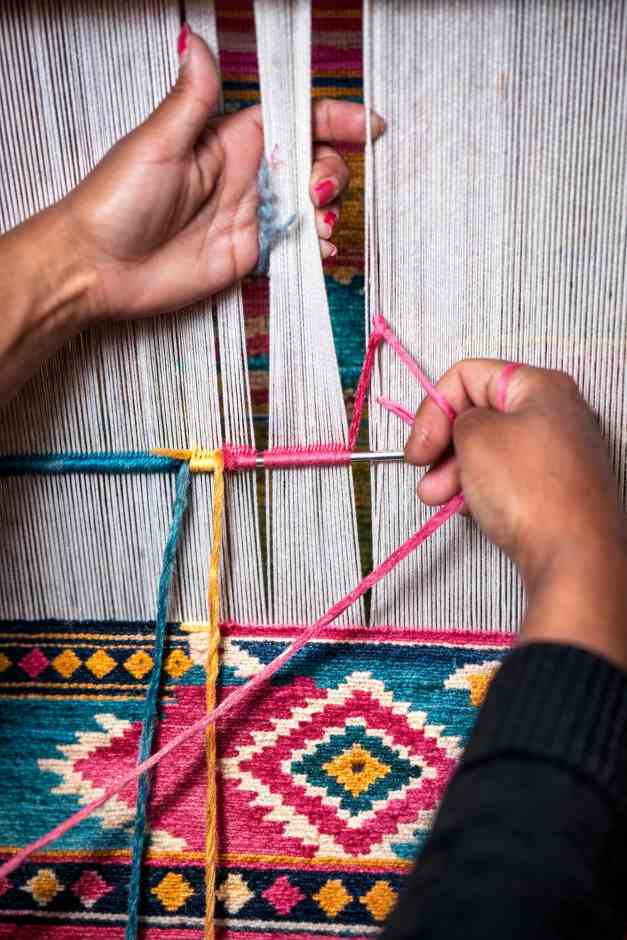
In the vast panorama of luxury furnishings, Hand knotted area rugs represent the pinnacle of quality, distinguishing themselves not only for their aesthetic value but, above all, for their structural characteristics that guarantee their longevity.
When it comes to high-end manufacturing, it is essential to understand that the definition “handmade” is not simply a marketing gimmick, but a technical description of a construction process that makes the product solid and destined to last for generations.
The distinction between a luxury item and a consumer product lies almost entirely in the production technique. While the mass market is flooded with cheap products, true connoisseurs and collectors are exclusively interested in Hand knotted area rugs, recognising them as both a heritage asset and a design object.
Our guide aims to objectively analyse what defines this category, how to assess its actual quality and how to integrate it correctly into the most ambitious interior design projects.
Hand knotted area rugs: what are they? How to make the right choice for every room in the house?
Hand knotted area rugs are textile products in which the pile is not glued or mechanically inserted, but is tied to the rug’s supporting structure, consisting of warp and weft.
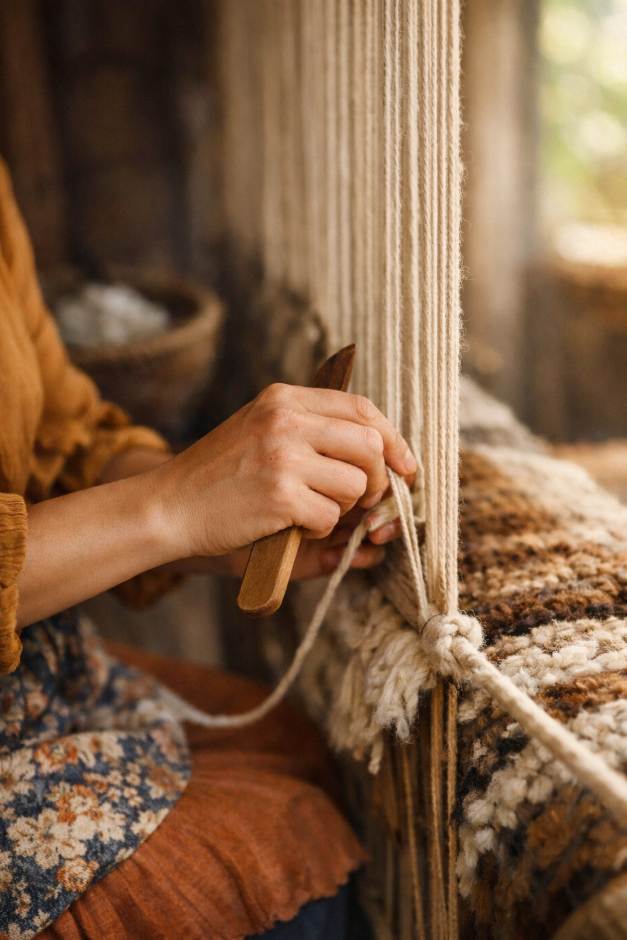
This technique, which boasts thousands of years of history and has evolved from ancient Persian, Turkish and Tibetan traditions, remains the only method today that guarantees maximum structural integrity. From a technical point of view, the process involves the craftsman creating a single knot around two adjacent warp threads, cutting the thread and proceeding with the next knot. This operation is repeated thousands, sometimes millions of times, until the work is completed.
Specifically, by knotting the fibres, it is possible to obtain pieces that are very resistant to traction and crushing. Unlike tufted rugs, where the pile is held together by synthetic glues that tend to crystallise and crumble within a decade, Hand knotted area rugs do not use adhesives. The pile is held in place by the physical compression of the weft against the knots.
Knowing these mechanical characteristics is therefore important in order to be able to recognise high-quality models and make the best choice for your interior design projects, knowing that you are purchasing a rug that will last over time.
The choice for the home must therefore be based on objective parameters of traffic and use. In high-traffic areas, such as entrances or corridors, the knotted structure ensures that the pile does not come loose. Furthermore, the “memory” of knotted wool allows the rug to recover its original shape, even after being compressed by heavy furniture. This is a physical resilience that is almost totally lacking in industrial productions or low-grade synthetic materials.
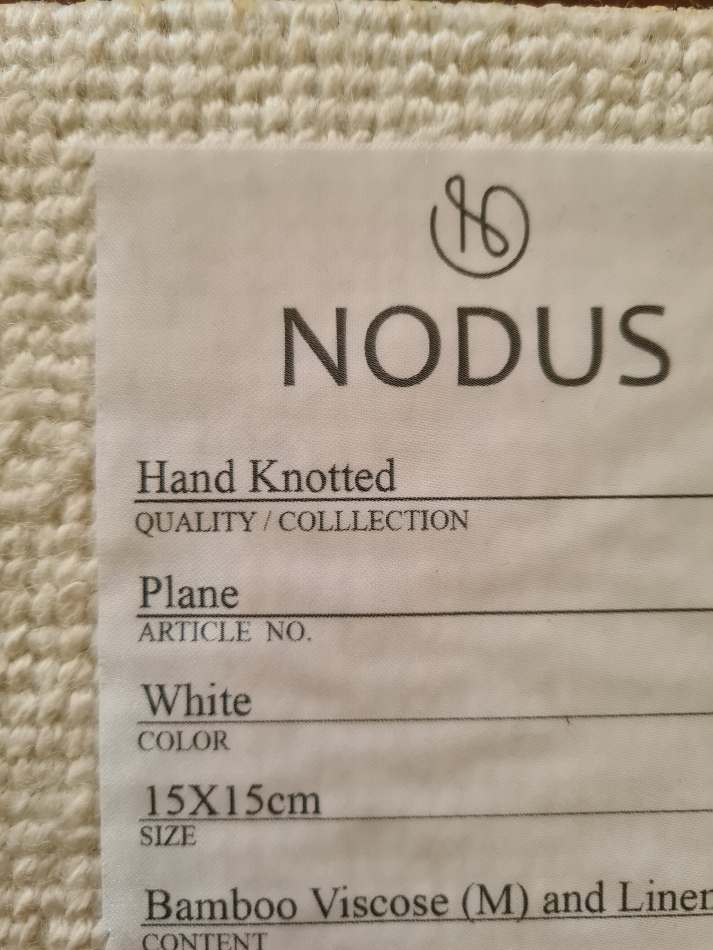
Nodus, the best Hand knotted area rugs.
>>> CONTACT US! <<<
How to recognise Hand knotted area rugs?
Recognising an authentic knotted rug requires a technical visual and tactile analysis that goes beyond the label.
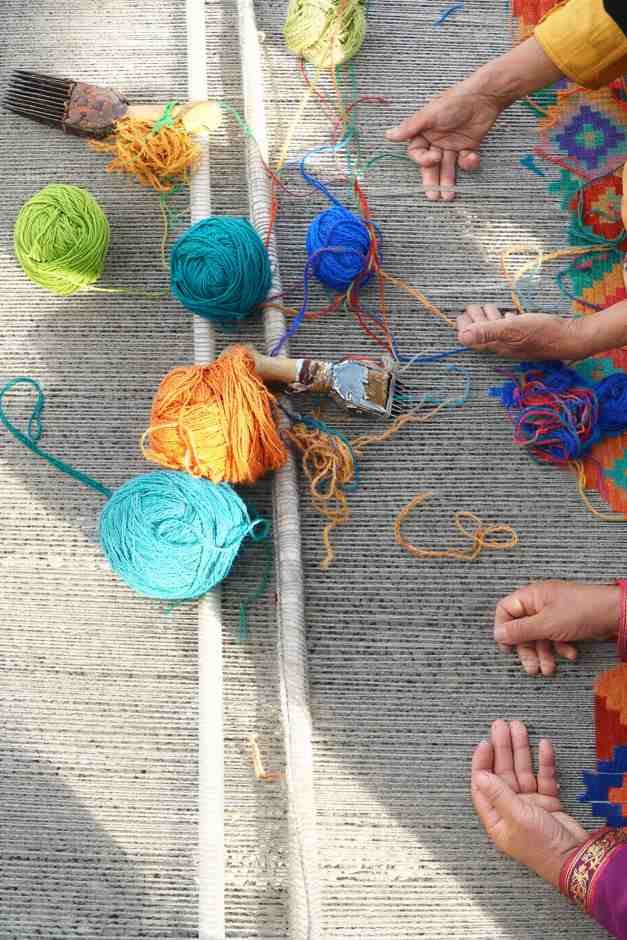
Hand knotted area rugs are produced by hand, with the aid of a vertical or horizontal loom.
The warp fibres, which form the vertical skeleton of the rug, are fixed to the frame structure using high-strength twisted cotton, wool or silk threads. The coloured threads are knotted around these fibres and, row by row, form the visible pile of the rug.
A foolproof method of identification is to observe the fringes. In a genuine knotted rug, the fringes are not a decorative element sewn on afterwards, but are the physical continuation of the warp threads that come out of the structure. If, when gently pulling a fringe, you notice a corresponding movement in a “ribbing” that runs along the entire rug, this confirms the structural continuity. In contrast, in industrial rugs, the fringes are often applied with a seam on the back.
Each rug is therefore made up of thousands or millions of independent knots. In this sense, density, expressed in knots per square inch or knots per square metre, is an objective parameter of evaluation. The higher the number of knots, the more detailed the design and the more precise the curved lines, similar to the pixel resolution of an image.
However, density is not the only parameter for assessing quality. In contemporary luxury design, such as that offered by Nodus, larger knots or thicker wool are often used to achieve specific textures. In these cases, the value is given by the complexity of the designer’s project and the quality of the raw material, not just by the arithmetic count of the knots.
By observing the structure of the rug, it is possible to verify whether it has been obtained by knotting the threads or by weaving or tufting. A simple but effective way to do this is to look at the back of the rug. How? In hand-knotted models, the design is visible on the back with the same clarity as on the front, almost as if it were a photographic negative. Every single dot of colour on the back corresponds to a physical knot. If, on the other hand, the back is covered with cotton canvas or a layer of latex, we are looking at a tufted rug, which has a lower commercial value and durability.
Watch the video to see how these rugs are made:
Ask for information about our Hand knotted area rugs.
What do you need to know when deciding to furnish a room with a hand-knotted rug?
When integrating a piece of this calibre into an interior design project, it is important to consider that Hand knotted area rugs are not static surfaces, but interact with light and space.
A fundamental technical feature is the “pile direction”. During knotting, the threads are cut and tend to tilt slightly downwards on the loom. This creates an optical effect known as the “light side” and “dark side”. Looking at the rug “grain and counter-grain”, the colours will appear much more saturated and darker on one side, and brighter and lighter on the other. An experienced interior designer will exploit this feature by positioning the rug in such a way as to achieve the desired effect when entering the room.
Hand knotted area rugs are the standard choice for the high end of the market because they guarantee perfect flatness over time. In fact, thanks to their balanced specific weight and flexible structure, knotted models adhere naturally to the floor, also improving the acoustics of the room by absorbing the sound reverberation of medium and high frequencies.
Knotted rug models have earned top spot in the preferences of decorators and interior designers for both their durability and stylistic versatility. These models can complement the décor of any room in the home, providing thermal warmth and protection for delicate floors such as parquet or marble.
Therefore, there are Hand knotted area rugs to suit every type of interior design style. In the case of brands such as Nodus, the possibility of customisation is total: it is possible to request a made-to-measure product, modifying not only the dimensions but also the shape (shaped, irregular) and colours, to obtain a unique product that respects the architectural constraints of the environment.
Both the models produced in the classic Persian or Oriental style and those with an abstract or contemporary design have an elegant appearance and a value that goes beyond that of the materials themselves. This value is given by the excellent work of experienced craftsmen who take months, sometimes over a year, to complete a single piece.
When evaluating the qualities of Hand knotted area rugs, one must not forget their ease of maintenance. How so? Unlike synthetic fibres, which retain dirt more easily, natural wool and silk release dust. Regular vacuuming and professional wet cleaning every 3-5 years is sufficient to keep the rug in perfect condition for decades.
Nodus, the finest Hand knotted area rugs.
Which Hand knotted area rugs to choose?
The versatility of a hand-knotted rug can be fully appreciated by looking at the catalogues of the manufacturers of these luxurious products, where ancient techniques meet cutting-edge design.
For example, there are models designed for home interiors that use blends of wool and silk to create contrasting effects of shine and opacity. Then there are models that have different structural characteristics depending on the region of production (asymmetrical Persian knot for complex curvilinear designs, Tibetan knot for more modern and geometric textures).
Even considering only indoor rugs, there are models designed for the most humid areas of the home or those at risk of stains, such as the dining room. In these cases, the correct choice is Hand knotted area rugs made of pure Himalayan wool, rich in natural lanolin, which makes it water-repellent, avoiding silk or viscose inserts that would be too delicate for contact with food or liquids. For the living room or bedrooms, where there is less foot traffic and people often walk barefoot, you may prefer rugs with a high percentage of silk or with relief patterns that offer a superior tactile experience.
In terms of materials, the choices available for making these luxury items are also defined by specific physical properties. Wool remains the queen of fibres, especially due to its ability to return to its original shape after compression.
Within natural yarns, a distinction can be made between plant-based yarns such as hemp or linen, which give a rustic-chic look, and animal-based yarns. The latter are ideal if you want to furnish your space with a durable and elegant-looking rug.
It is essential to be wary of polypropylene or acrylic imitations! Although they may visually imitate knots, they lack all the hygroscopic, thermal and ecological properties of natural fibres.
The availability of so many different models, distinguished by shape, colour and size, facilitates the work of those involved in interior design projects. In fact, even in the most difficult contexts to furnish, it is always possible to find Hand knotted area rugs that can give a special touch to the environment.
The current trend sees a strong demand for “shaped rugs”, i.e. irregularly shaped products that break the rigidity of the classic rectangle. This is a technical challenge that only the best knotters in the world are able to manage while maintaining the correct structural tension.
Ask for information about our Hand knotted area rugs.
Hand knotted area rugs as an investment
In an era dominated by planned obsolescence, Hand knotted area rugs stand out as durable goods with potential for appreciation.
It is an objective fact that high-quality rugs, especially those designed by renowned designers and produced by historic manufacturers, retain their value better than almost any other piece of furniture. The international auction and collecting market regularly confirms that rare or particularly valuable pieces can increase in value over time, becoming true works of art in which to invest.
Repairability is another key factor that contributes to maintaining value. Since the rug is constructed knot by knot, it is possible to repair holes, reconstruct worn edges or re-knot damaged areas. An expert restorer can therefore insert new knots into the existing warp grid, making the repair virtually invisible. This option is completely unavailable for industrial rugs, which are destined for disposal once damaged.
Therefore, the higher initial cost of a hand-knotted rug must be amortised over a period of use that can exceed fifty years. This often makes the cost per year of use lower than that of cheaper solutions that require frequent replacement.
In conclusion, choosing one or more Hand knotted area rugs means making an informed choice based on irrefutable technical data: structural integrity, superior quality raw materials, environmental health and artistic value.
For a brand like Nodus, which combines this ancient technique with the vision of the greatest contemporary designers, the rug becomes the meeting point between the history of craftsmanship and the future of living. This means offering customers not only a piece of furniture, but a cultural heritage that can be touched with your own hands.
Nodus creates prestigious rugs.
Bring luxury into your home!
Nodus creates prestigious rugs.
Bring luxury into your home!
>>> CONTACT US! <<<
 Nodus has reinvented the luxury rug. It was in fact the first brand to propose the concept of the rug as a work of contemporary art.
Nodus has always created exclusive products that furnish the most beautiful homes in the world. Do you want to make your home inimitable as a work of art?
Bring a hand knotted rug of the highest quality and design into the spaces of your daily life! Give your family and the people you love the beauty of a dream masterpiece! Every piece of Nodus is designed by famous Designers, making it recognisable and prestigious. In this way, each rug is unique: you will not find another one like it. Like all beautiful and unrepeatable things, one piece in the Nodus collection sets you apart and speaks to others about your taste and elegance. CONTACT US!