Nodus as a bridge between contemporary art and ancient rug traditions
Design — Luxury rugs — Feb 01.2026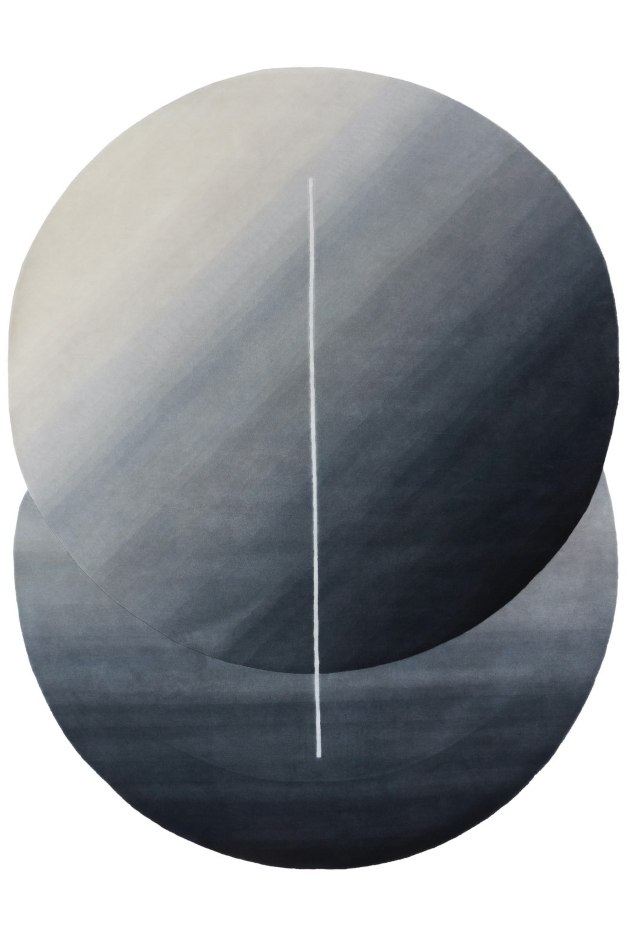
When we talk about luxury rugs , one thing is now clear: they are no longer just furnishing accessories, but textile products with a strong cultural (and technical) value.
In this context, analysing Nodus’ role as a bridge between contemporary art and ancient rug traditions means describing a unique production model, capable of blending two distinct temporal and methodological universes.
On the one hand, we find the speed and imagination of the world’s greatest designers; on the other, we find the slowness and manual skill of artisans who work according to standards that have remained unchanged for centuries. This convergence is a philosophical, technical and logistical challenge.
In other words, Nodus does not simply superimpose a modern design onto an ancient medium, but forces the age-old technique to evolve to accommodate visions that, until a few years ago, were considered impossible to transfer onto a loom.
However, there are many more reasons to consider Nodus as a bridge between contemporary art and the ancient traditions of rugs. We will list them all in the rest of this post!
The great technique of hand-knotting as a quality standard
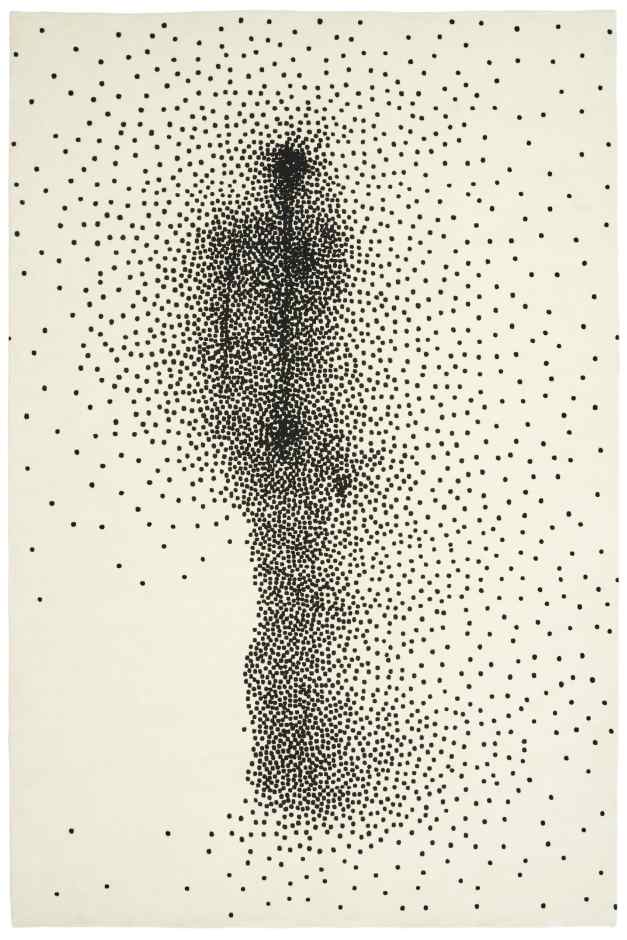
To fully understand Nodus’ role as a bridge between contemporary art and the ancient traditions of rugs, it is essential to start by analysing the production process. After all, it is and remains the foundation of every textile work.
Specifically, Nodus rugs are created in geographical areas historically dedicated to this art, such as Asian countries, where knowledge of the subject is deeply rooted in the social fabric. The technique used is primarily the hand knotting, which represents the pinnacle of textile quality.
Unlike manual or mechanical tufting methods, where tufts of wool are inserted into a pre-existing base and then glued, knotted rugs are constructed knot by knot around the warp threads to create a solid structure.
The most important technical detail concerns the type of knot, which can be either an asymmetrical Persian knot or a Tibetan knot. The latter is made by wrapping the thread around a metal rod before being cut, which creates a unique surface texture.
The knot density in Nodus luxury rugs can exceed one hundred per square inch. This is not just a statistic: the higher the density, the more detailed and sharp the pile design will be. It is similar to the pixels in a digital image.
The process requires execution times that challenge the logic of today’s mass market. This is because a single skilled craftsman can only make a certain number of knots per day, meaning that the production time for a large rug can exceed six months.
Furthermore, the choice of raw materials follows strict protocols linked to the physical properties of the different fibres. For example, wool from the Himalayan highlands is selected for its high lanolin content, which guarantees natural waterproofing and resistance to dirt. Pure silk and bamboo viscose are used for their light refraction properties and to create tactile contrasts.
In such a scenario, Nodus acts as a guarantor of the purity of the method. In other words, it is able to ensure that the creative innovation of designers does not compromise what tradition dictates.
Nodus is contemporary art.
And traditional knotting techniques.
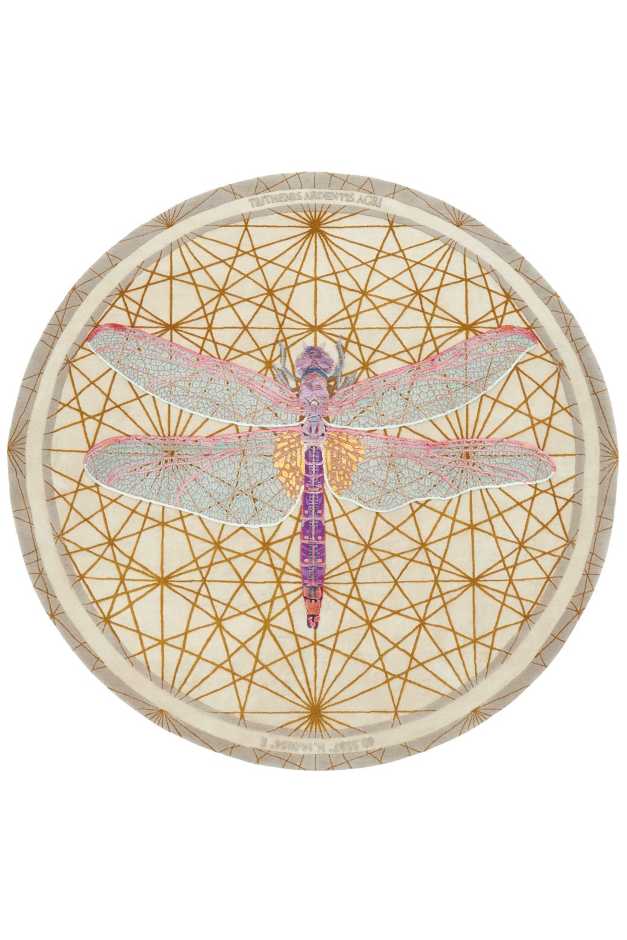
The translation of visual language: from file to loom!
The second level of analysis concerns the transformation of the artistic project into a physical artefact. What does this mean? The real complexity in defining Nodus as a bridge between contemporary art and ancient rug traditions lies in the design engineering phase. Let’s try to understand why.
Nodus collaborates with creatives who often do not have specific textile training. These authors conceive their works through advanced modelling software or free artistic sketches, which ignore the constraints of the loom grid. As a result, Nodus’ task is to translate these inputs (often complex files or three-dimensional renderings) into a full-scale map, where each individual square corresponds to a knot of a specific colour.
This conversion process is critical when it comes to managing colour shades and gradients, i.e. elements typical of contemporary digital art (which are, however, foreign to the tradition of classic oriental rugs).
To replicate a continuous shade using mass-dyed wool threads, artisans must resort to advanced techniques such as controlled abrash or the mixing of threads of different shades within the same knot or in adjacent knots. This creates an optical blending effect reminiscent of pictorial pointillism.
The precision required is millimetric. This is because an error in colour interpretation during dyeing or positioning on the loom would alter the entire perception of the work. On the other hand, the use of standard colour scales, such as the Pantone system, allows control of the final result, ensuring that the blue imagined by the designer in Tokyo or Milan corresponds exactly to the blue of the wool dyed in vats in Nepal (or elsewhere).
In short: the procedure is very complex, and modern technology supports craftsmanship, providing the tools necessary to push manual skills beyond their limits.
Nodus creates luxury rugs.
Which increase in value over time.
The deconstruction of form and three-dimensional materiality
Another fundamental aspect that distinguishes Nodus’ work (and justifies its role as an innovator) is the definitive break with the standard geometry of the rug.
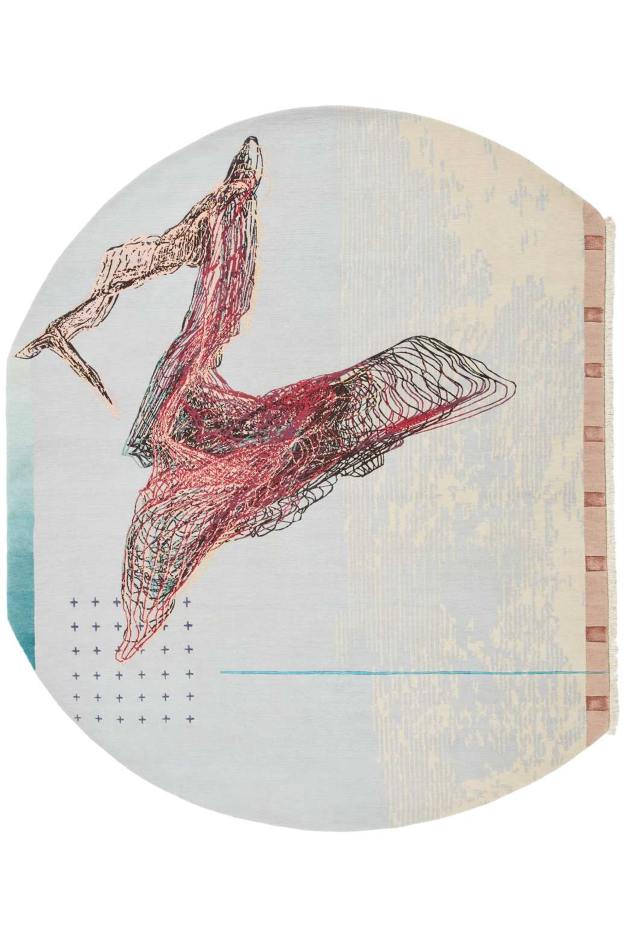
In fact, traditional rugs are generally rectangular or circular. Contemporary art, however, often rejects clear-cut frames and seeks irregular or fragmented shapes. In this sense, Nodus has helped to institutionalise the concept of shaped rugs, accepting the challenge of producing items with complex, jagged edges, holes or even deconstructed shapes!
From a technical point of view, creating a non-rectangular rug on a loom involves considerable difficulties in managing structural tensions. This requires very laborious post-production finishing processes, such as blocking and ironing on specific templates that trace the shape of the original design.
But that’s not all. In addition to two-dimensional shapes, Nodus explores the third dimension by varying the height of the pile, a technique known as “carving” or manual sculpting. Designers exploit this possibility to create bas-reliefs, carving into the pile to define the contours of the design or leaving some areas flat in contrast to areas with a high, dense pile.
This manipulation of the surface transforms the rug from a simple floor covering into a sculptural object, capable of interacting with light and offering an unusual tactile experience.
The execution of these variations requires absolute mastery in the use of specific tools, which, in the hands of the artisans, become chisels for shaping the wool.
But there are other aspects that identify Nodus as a bridge between contemporary art and ancient rug traditions. Let’s continue with our exhibition!
Nodus: rugs as modern works of art.
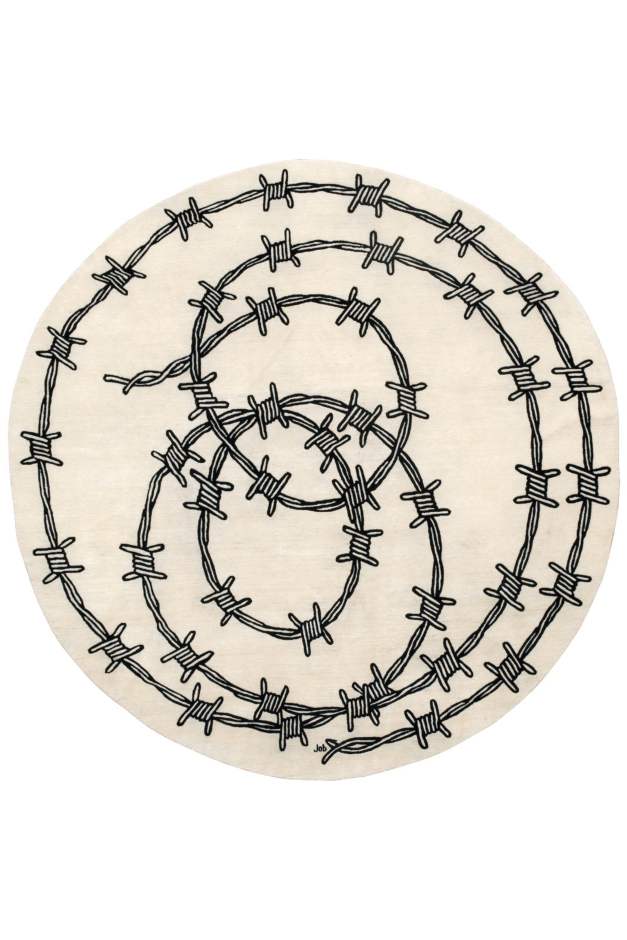
Heritage value: the rug as a long-term investment
Analysing the Italian company’s market positioning, one fact emerges strongly: Nodus as a bridge between contemporary art and the ancient traditions of rugs. Specifically, the brand has transformed the rug into an alternative financial asset.
Today, the boundary between design and art is increasingly blurred, and the “collectible design” market generates significant turnover in international auction houses. So what? A rug made by Nodus is not conceived as a consumer good subject to rapid obsolescence, but as an investment asset destined to increase in value over time. This is made possible by the strategy of limited editions and custom made pieces.
Each Nodus product also comes with certificates of authenticity that trace its origin, materials, designer and serial number, if applicable. These documents are essential for traceability and for insurance or resale valuations on the secondary market.
The economic value is supported by two objective pillars: the designer’s work and the great durability of each product. After all, a hand-knotted rug made from the finest materials has a useful life estimated in decades, if not centuries, resisting wear and tear much better than many other industrial products.
For all these reasons, collectors and architects view the purchase of a Nodus rug not only as an aesthetic expense, but as an allocation of capital in a product that has intrinsic value (the amount of human labour and precious materials) and extrinsic value (the designer’s signature and rarity).
Museum exhibitions and participation in prestigious art fairs further enhance the value of the pieces, placing them in a cultural context that protects them from the fluctuations of passing fads.
Bring a work of contemporary art into your home!
Choose a Nodus rug!
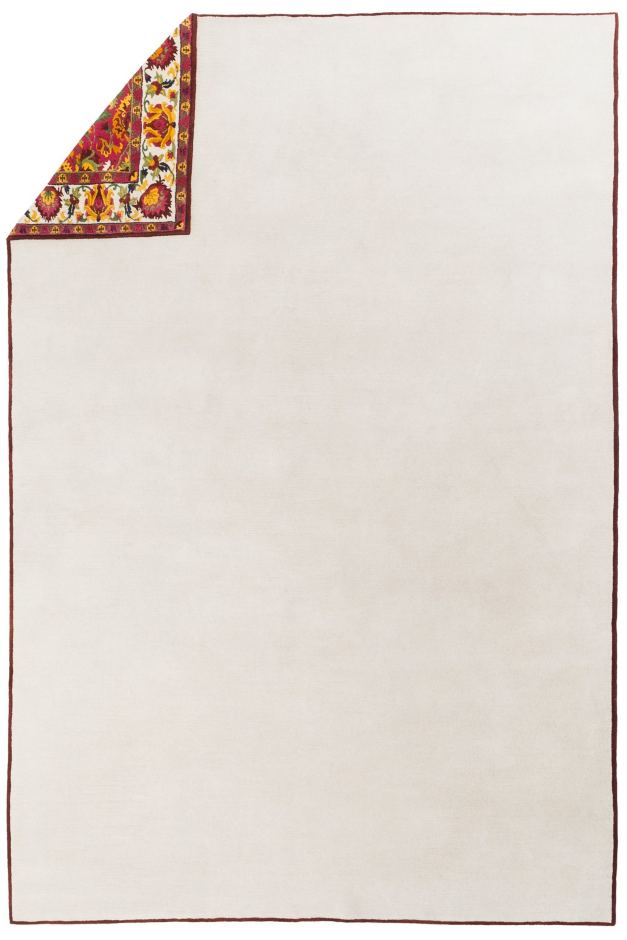
Sustainability as a clear choice
Finally, the concept of bridging the gap between contemporary and traditional must be examined through the lens of social responsibility and sustainability, two essential issues for today’s sophisticated consumer.
Nodus’s operation has a direct impact on the very survival of traditional rug-making techniques. How so? Without the demand generated by the contemporary luxury market and without the technical challenges imposed by modern designers, many of the skills associated with complex knotting and natural dyeing would be at risk of disappearing, crushed by competition from industrial products and the migration of the workforce to other sectors.
By commissioning works of high technical complexity, Nodus guarantees continuity of work and economic stability for workshops in Nepal, India and other countries. In doing so, it enhances the craft of the artisan and encourages the transmission of knowledge to new generations.
It is essential to emphasise that all this takes place in strict compliance with international ethical standards. In fact, Nodus adheres to protocols that certify the absence of child labour and guarantee decent working conditions and fair wages (including for women).
Furthermore, contemporary research is pushing for greater ecological sustainability even in traditional processes, promoting, for example, the use of dye water purification systems and the use of dyes with low environmental impact. For these reasons, it is therefore more than legitimate to think of Nodus as a bridge between contemporary art and the ancient traditions of rugs.
The product thus becomes a vehicle for ethical values: those who purchase a Nodus rug are not only buying a design object, but are also financing a productive ecosystem that protects a cultural heritage of humanity.
Moreover, the transparency of the supply chain, which allows you to trace the rug from a penthouse living room in New York to the Nepalese village where it was knotted, responds to the demand for truth and traceability that is characteristic of modern luxury.
Ultimately, the fusion of Western artistic vision and Eastern craftsmanship creates a virtuous circle. In this circle, innovation saves tradition from oblivion, while tradition provides innovation with the material substance to exist in the real world.
Nodus creates luxury rugs.
Choose a work of textile art!
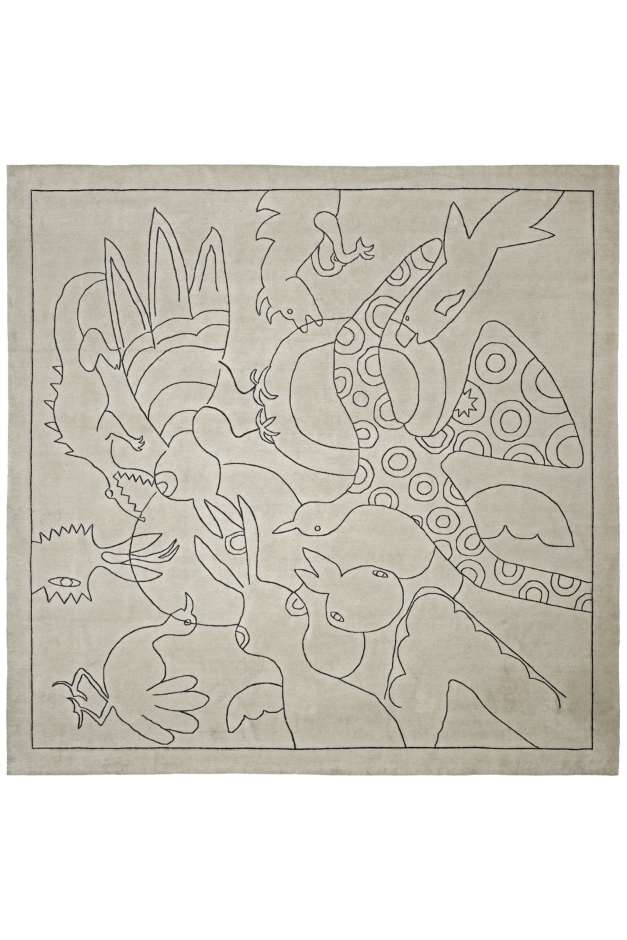
Let’s sum up: Nodus as a bridge between contemporary art and ancient rug traditions
In light of the technical data, market analysis and social considerations we have presented, Nodus’ role as a bridge between contemporary art and ancient rug traditions is clear.
In fact, the brand does not just produce rugs, but establishes a complex dialogue between different eras and cultures, demonstrating that the oldest of textile techniques is still the most suitable medium for expressing today’s avant-garde design.
The objective quality of the materials, the precision of the manual execution and the visionary power of the artistic projects converge in luxury rugs that transcend their function to become lasting cultural testimonies.
Therefore, for those who design high-profile spaces or collect designer pieces, choosing Nodus means relying on a company that guarantees excellence through verifiable parameters and a transparent history.
We have come to the end of our post on Nodus as a bridge between contemporary art and the ancient traditions of rugs. If you wish to incorporate a work that combines the art of our time with the technical mastery of past centuries into your interior design projects, explore our collections. What’s more, we invite you to contact our team for personalised advice and to discover the limited editions available, so you can experience first-hand the reality of luxury that is substance, not appearance!
Nodus creates handmade rugs.
Bring luxury into your home!
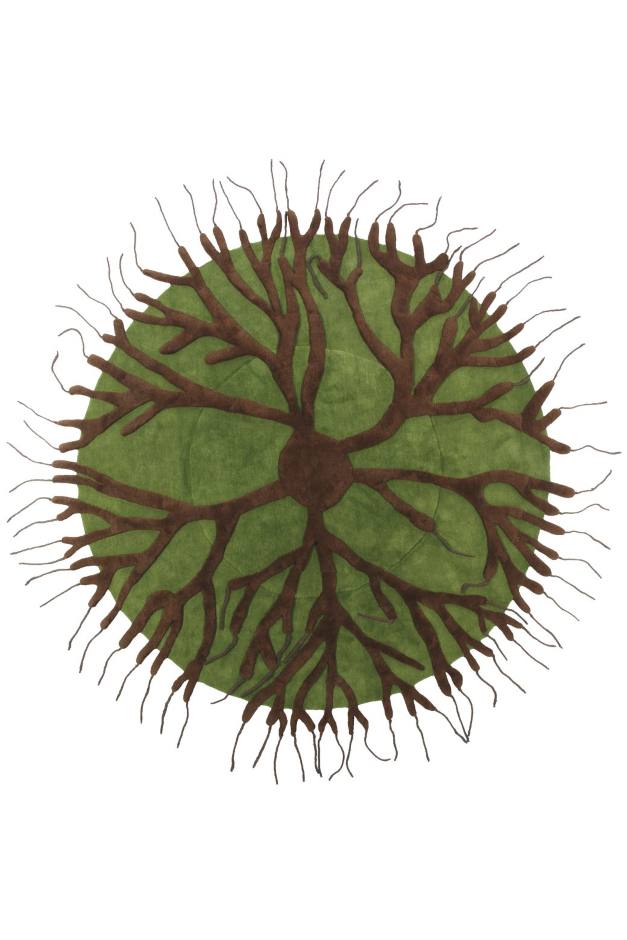
Nodus has reinvented the luxury rug. It was the first brand to propose the concept of the rug as a contemporary work of art. Nodus has always created exclusive pieces that furnish the most beautiful homes in the world.
Would you like to make your home as unique as a work of art? Bring a hand-knotted rug of the highest quality and design into your everyday life! Give your family and loved ones the beauty of a dream masterpiece!
Every Nodus piece is designed by famous designers, making it recognisable and prestigious. This means that every rug is unique: you will not find another one like it. Like all beautiful and unrepeatable things, a piece from the Nodus collection sets you apart and speaks to others of your taste and refinement.