How do you create a custom rug?: the four stages of the designer rug customisation process
custom rugs — Mar 08.2026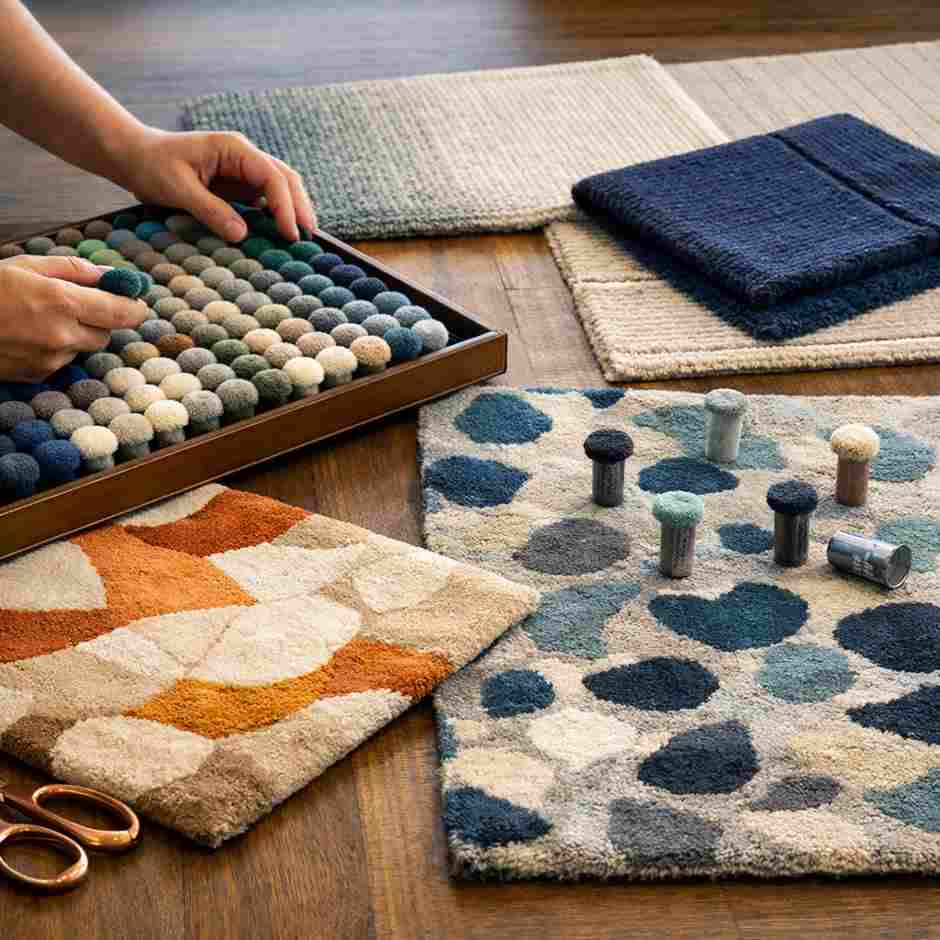
In the high-end and luxury interior design sector, incorporating a textile product into an interior design project is never simply a decorative requirement. Rather, it represents a specific architectural choice.
Consequently, understanding in detail how to create a custom rug allows architects, interior designers and collectors to explore the possibilities offered by the art of manufacturing excellence. After all, a custom rug is, to all intents and purposes, an element engineered to meet unique spatial parameters. It is therefore capable of influencing the acoustics, volumetric perception and light refraction of any room. This also applies to commercial locations.
When commissioning a custom piece, the work follows a rigorous industrial and artisanal protocol. At Nodus, we collaborate daily with the world’s leading designers to translate their visions into tangible works, applying a scientific method to the customisation of our luxury rugs. This is the only method that allows us to create a product of unquestionable quality.
In this article, we analyse the technical steps and time required to produce a designer rug that will last for generations.
Nodus creates custom rugs.
Bring luxury into your home!
>>> CONTACT US! <<<
Your customised rug in 5 steps
How do you create a custom rug ?The process from the idea of a customised rug to the delivery of the finished piece takes a certain amount of time, which is needed to work with the necessary care. For more complex projects, the various stages can take several months and involve different professionals.
In general, we can break down the process of creating a custom rug into five stages:
- preliminary study of the space and furnishing objectives
- definition of the rug’s characteristics
- manufacturing of the product
- post-weaving finishing processes
- delivery of the custom rug
Preliminary study of the space and furnishing objectives, i.e. the feasibility of the project
How do you create a custom rug that meets high-end requirements? The starting phase is based on collecting data about the destination environment. At this stage, a technical committee is set up between the client, the architectural firm and the manufacturer’s project managers.
The analysis begins with a study of the floor plan, evaluating the room’s vanishing lines, the size of the furniture and pedestrian traffic flows. This feasibility study is crucial in determining the exact dimensions of the product. A rug intended for a dining room, for example, will require a perimeter large enough to accommodate chairs, even when they are pushed back. This attention to detail prevents unevenness and premature wear of the edges of the product.
In addition to spatial measurements, the preliminary study analyses the physical characteristics of the room.
Sunlight exposure is assessed in order to calculate whether or not colour-fast yarns are required. Often, the acoustic reverberation of the room is also analysed. In fact, hard surfaces, such as marble or resin, generate an echo that the rug has the task of absorbing thanks to its material density.
The decisions made at this initial stage vary depending on the intended use. For example, the abrasion resistance parameters required for the lobby of a luxury hotel or a showroom are different (and much more stringent) than those required for a bedroom in a private home.
Nodus creates custom rugs.
Bring luxury into your home!
>>> CONTACT US! <<<
Defining the characteristics of a custom-made rug
Once the environmental data has been collected, the process of How to create a custom rug enters the phase of material selection and technical configuration. It is at this point that the specifications take shape, translating aesthetics into physical and chemical specifications.
What is done at this stage? The exact percentages of the pile composition are defined. Hand-spun Himalayan wool is often selected as the structural base due to its very high natural concentration of lanolin, which acts as a repellent against liquids and dirt. When the project requires a specific shine, pure silk is introduced in calculated percentages, exploiting its property of reflecting light and creating glossy-matt contrasts with the wool.
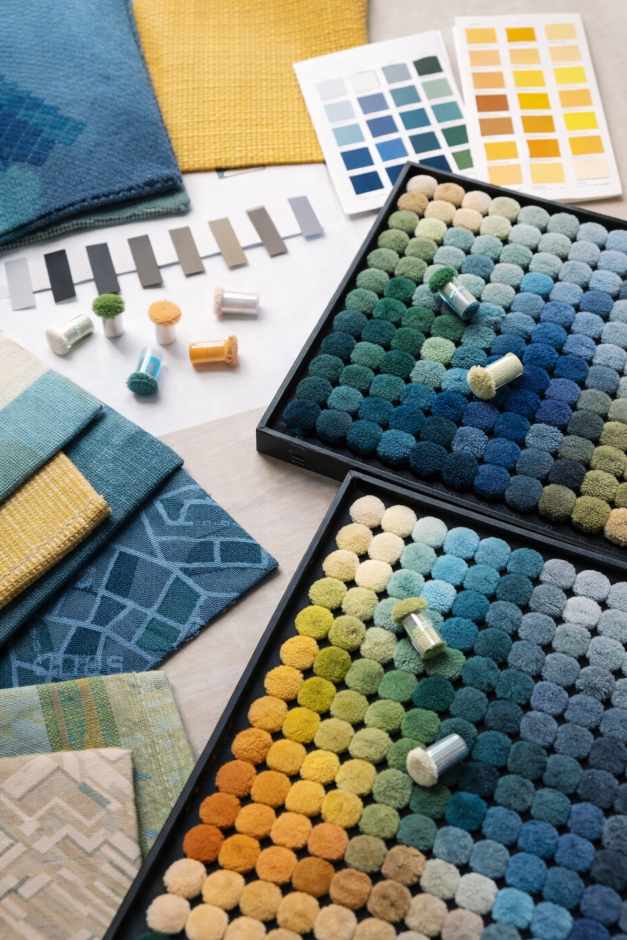
The colour selection abandons visual approximation in favour of international classification systems, such as the Pantone code. This ensures that the colour chosen during the design phase corresponds to the final result.
Depending on the complexity of the design, the required knot density, measured in knots per square inch, is also determined. A minimal geometric pattern may require medium density, while a complex figurative design or gradual shading (typical of the works of great contemporary designers) requires the use of finer yarns and a very high knot density. The aim is to ensure maximum visual resolution.
How do you create a custom rug?Our journey to discover the processes that lead to the creation of completely customised luxury rugs continues in the next paragraph!
The manufacturing phase
The transition from design to material is the highlight of the creation process. The designer’s digital file is translated into a technical map, where each individual pixel corresponds to a physical knot that the craftsman will have to make.
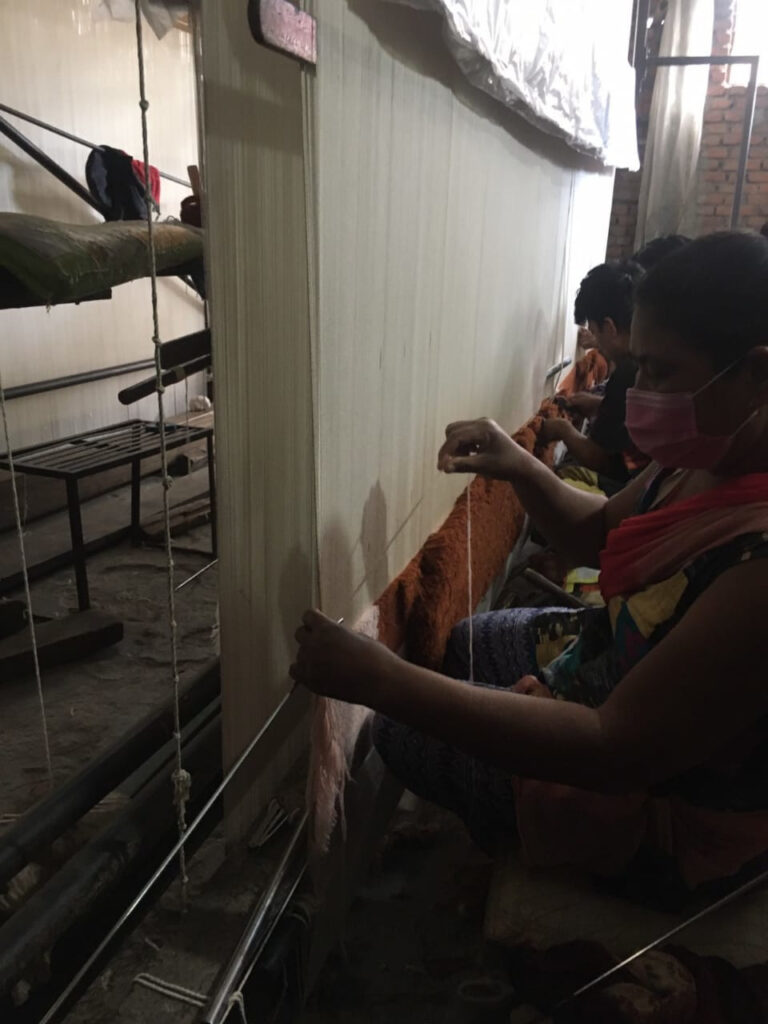
The design is then sent to master weavers in Asia, who build the warp on the loom, creating the skeleton of the rug.
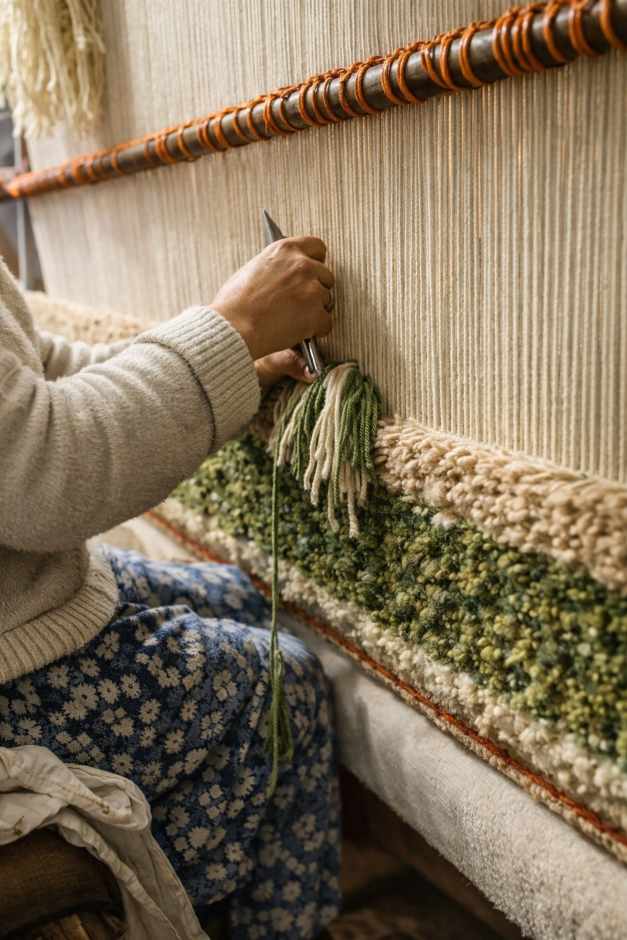
At this point, the pile is inserted. For rugs of the highest quality, the hand-knotting technique is the only valid option. In this process, each thread is individually tied around the warp, making the pile an integral part of the structure.
Hand knotting guarantees structural integrity that lasts for decades, allowing for any future conservative restoration work. Alternative methods (such as flat-woven rugs, tufted pieces or patchwork assembly) offer lower thicknesses or no pile, making them specific solutions that are useful for precise architectural requirements.
One final note. Before starting production of the final product, which sometimes reaches and exceeds tens of square metres in size, luxury manufacturing practice requires a sample to be made. This is a physical sample, usually measuring a few tens of centimetres per side, woven with the final materials and dyed with the final colours. This objective test is essential because the colour rendering of a natural yarn dyed by hand can vary slightly due to the specific absorption of that particular batch of wool or silk. The sample is then sent to the client for formal approval. This eliminates any margin for error before months of work on the loom begin.
Nodus creates custom rugs.
Bring luxury into your home!
>>> CONTACT US! <<<
The finishing processes that follow weaving
The end of the loom work does not mark the end of the manufacturing process. The raw rug is in fact a little stiff and has an uneven pile height.
The finishing procedures then begin, which are equally essential for the stability of the product. What does this involve? Each piece is washed with plenty of water and specific soaps. This step has a dual function: on the one hand, it removes spinning residues and excess colour, ensuring that the dyes do not run in the future. On the other hand, it allows the wool to shrink slightly, settling and tightening the knots so that they do not loosen under the weight of foot traffic.
The wet rug is then placed on special tensioning frames and dried. This forced tension ensures that the final measurements correspond exactly to the initial architectural design and that the rug remains perfectly flat on the floor. This prevents the formation of unsightly waves.
The final step is manual shaving, which is carried out with special scissors. This operation serves to level the pile to the millimetre height required by the designer.
In many designer projects, “carving” is also carried out. What is this? It is a kind of hand-chiselling around the contours of the design. What is the purpose of this operation? To create a three-dimensional separation between the colours, to determine a technical detail that further enhances the complexity (and value) of the textile work.
The delivery phase of the custom rug
At the end of the long and complex manufacturing and finishing process, the rug undergoes strict quality control. The aim is to verify its structural integrity, dimensional accuracy and colour fidelity with respect to the approved sample.
Only if all these instrumental and visual tests are passed is the piece packaged (according to international transport safety standards) and ready for delivery to the end customer.
The installation of the product in the room marks the moment when the initial spatial analysis is validated. Here, all the furnishing elements come together in a coherent design.
The durability of a product of this level is linked to physical parameters and proper conservation. What does this mean? As these are natural fibres of the highest quality (such as wool, linen, hemp or silk), the maintenance required is fairly simple, but it must be rigorous. A suggestion?
Regular vacuuming removes dust particles that could otherwise damage the fibres at the base of the knot over time.
Unlike synthetic materials, high-quality natural fibres do not retain dirt deep down. Professional washing with water every three to five years therefore ensures complete regeneration of the pile.
Nodus creates custom rugs.
Bring luxury into your home!
>>> CONTACT US! <<<
The actual timing (and the value of the investment)
How do you create a custom rug ? Now it’s time to talk about timing. In fact, understanding how a custom-made rug is created also requires an analysis of the time factor, an element that justifies the fact that these products are positioned in the luxury market.
Specifically, hand-knotting is an operation that is subject to physical human limitations that cannot be avoided. What does this mean? An experienced craftsman, working at a pace that respects the worker, is able to make a few thousand knots in a working day. Considering that a three-metre by four-metre rug with a medium-high knot density contains over one and a half million such knots, it is clear that the weaving phase alone requires the simultaneous work of several knotters on the same loom. This takes place over a period that, on average, ranges from three to six months.
Added to this timeframe is the preparation of the raw material. We are talking about the manual spinning of wool which, unlike mechanical spinning, does not break the long fibres, thus ensuring greater resistance. This preparation requires several weeks of work. This is followed by the dyeing process in small vats, which allows the colour to penetrate to the heart of the fibre.
The sum of these production stages, which cannot be shortened if high quality standards are to be maintained, brings the delivery time for a custom rug to an average of five, six, seven or eight months from project approval. This timeframe is not a delay, but the exact measure of the human labour required to create a lasting asset.
So, our guide to how a custom rug is created ends here. Now you have a much better understanding of the various stages involved in the production of a customised luxury item. You know specifically how Nodus’ master craftsmen work and why a custom-made, hand-knotted rug is such a unique and precious piece of furniture. Now it’s your turn! Are you looking for a 100% customised item? Put us to the test!
Nodus creates prestigious rugs.
Bring luxury into your home!
>>> CONTACT US! <<<
 Nodus has reinvented the luxury rug. It was in fact the first brand to propose the concept of the rug as a work of contemporary art.
Nodus has always created exclusive products that furnish the most beautiful homes in the world. Do you want to make your home inimitable as a work of art?
Bring a hand knotted rug of the highest quality and design into the spaces of your daily life! Give your family and the people you love the beauty of a dream masterpiece! Every piece of Nodus is designed by famous Designers, making it recognisable and prestigious. In this way, each rug is unique: you will not find another one like it. Like all beautiful and unrepeatable things, one piece in the Nodus collection sets you apart and speaks to others about your taste and elegance. CONTACT US!